
Card #068 · Reptiles
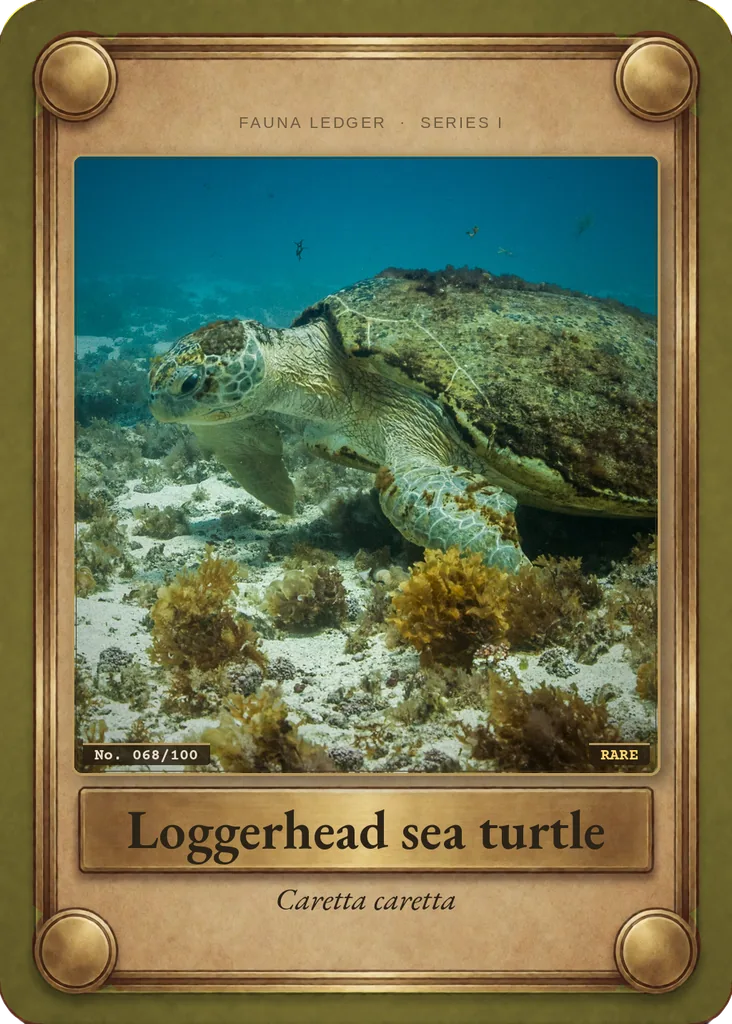
Loggerhead sea turtle
Caretta caretta
Rare VU · Vulnerable
Field notes
- Classification
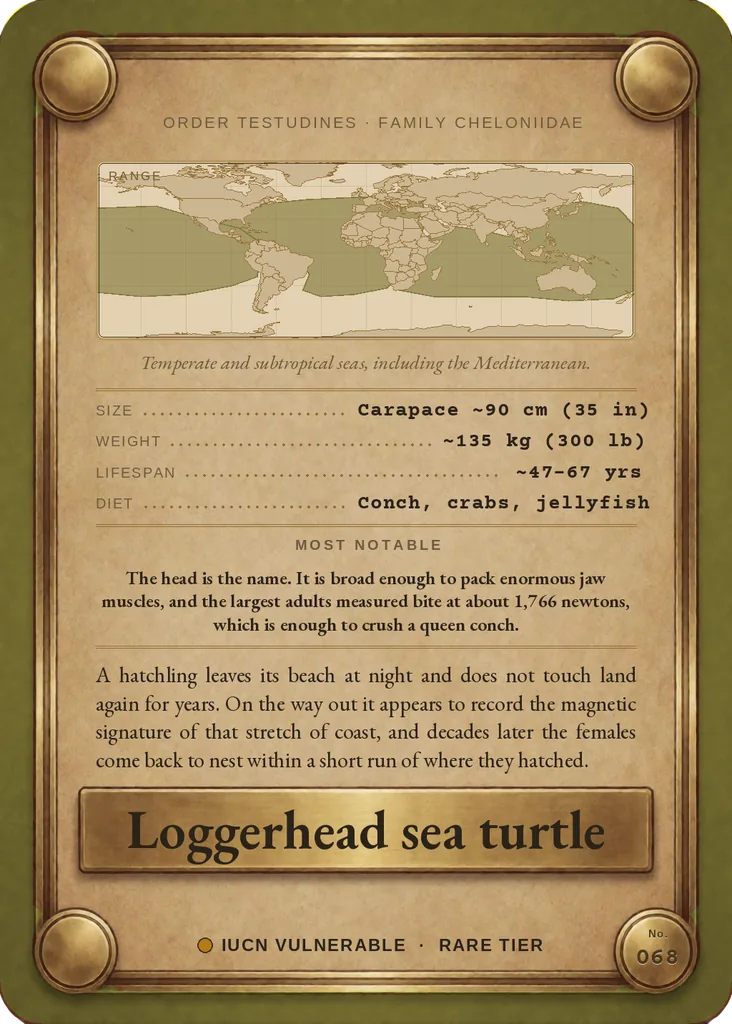
- Order Testudines · Family Cheloniidae
- Range
- Temperate and subtropical seas worldwide
- Size
- Carapace ~90 cm (35 in)
- Weight
- ~135 kg (300 lb)
- Lifespan
- ~47–67 yrs
- Diet
- Conch, crabs, jellyfish
Most Notable
The head is the name. It is broad enough to pack enormous jaw muscles, and the largest adults measured bite at about 1,766 newtons, which is enough to crush a queen conch.
A hatchling leaves its beach at night and does not touch land again for years. On the way out it appears to record the magnetic signature of that stretch of coast, and decades later the females come back to nest within a short run of where they hatched.
The bite grows with the head. Juveniles measured at 12, 31, 44 and 65 cm of shell averaged 27, 152, 343 and 374 newtons of bite force. Adults averaged 575, and the hardest bite recorded was 1,766. That curve is why the diet switches to armoured prey as they mature.
Nest temperature decides the sex. Warmer sand produces females, cooler sand males, with the switch falling within about a degree, which is why a warming beach is not a small problem for them.
The years in between are called the lost years. Hatchlings ride the ocean gyres as drifting open-sea nurseries, and for a long time nobody could say where any of them were.
The Red List rates the species Vulnerable worldwide, but that single figure hides a lot. Several loggerhead subpopulations are assessed separately and some are in much worse shape than the global number suggests.
Range: Temperate and subtropical seas, including the Mediterranean.