
Card #054 · Birds
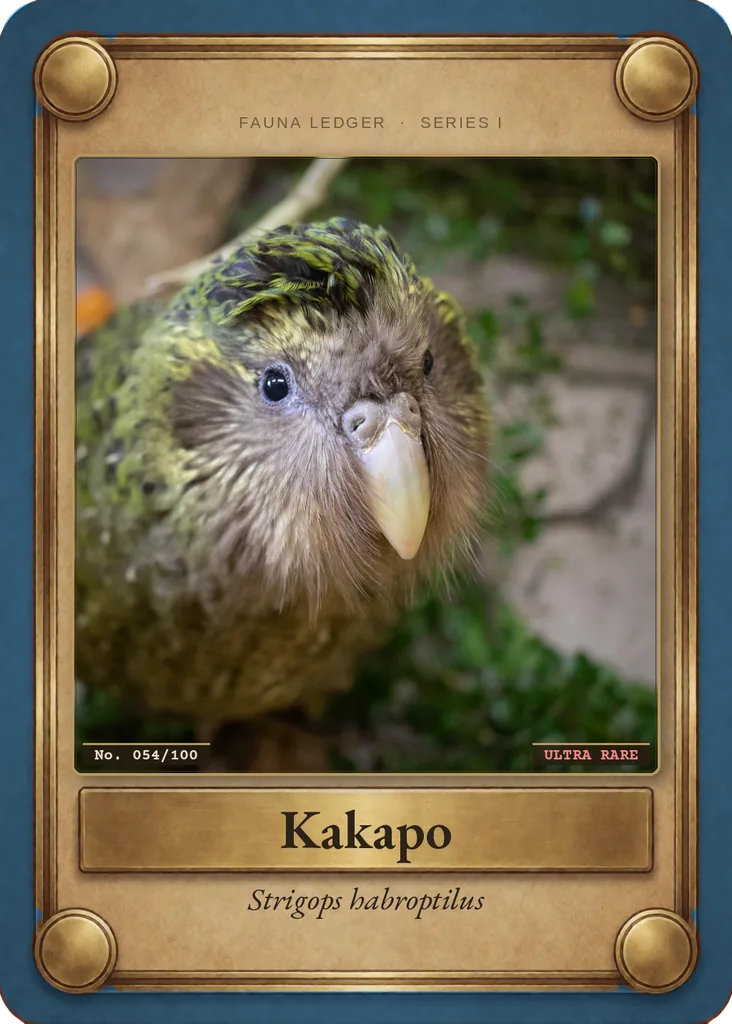
Kakapo
Strigops habroptilus
Ultra Rare CR · Critically Endangered
Field notes
- Classification
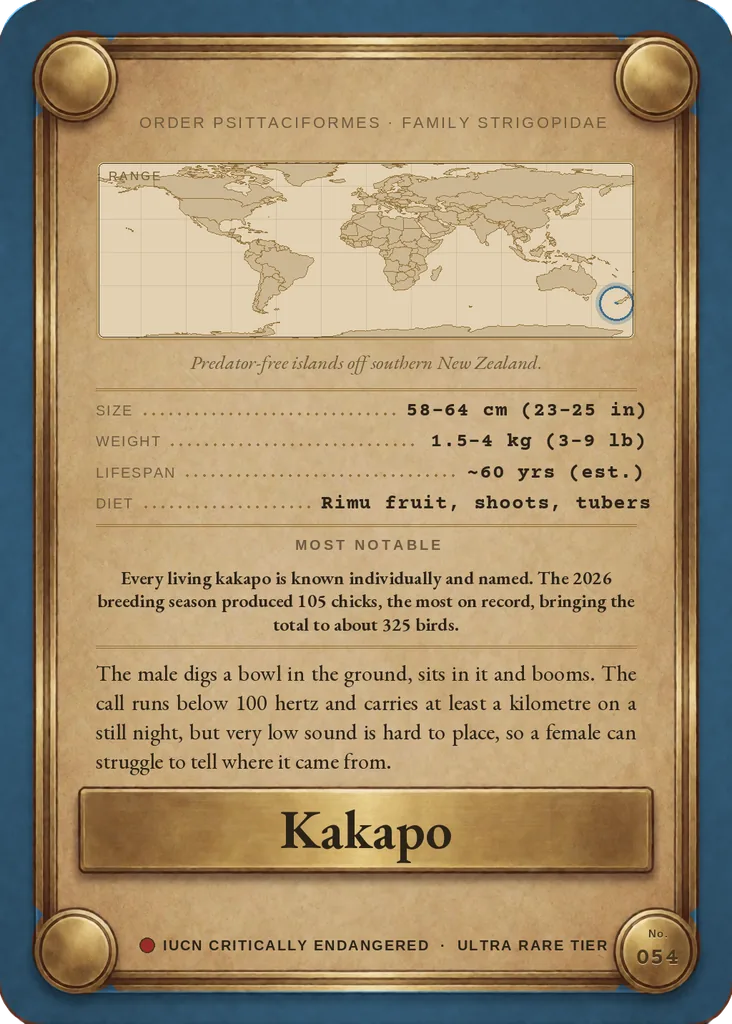
- Order Psittaciformes · Family Strigopidae
- Range
- Predator-free islands off southern New Zealand
- Size
- 58–64 cm (23–25 in)
- Weight
- 1.5–4 kg (3–9 lb)
- Lifespan
- ~60 yrs (est.)
- Diet
- Rimu fruit, shoots, tubers
Most Notable
Every living kakapo is known individually and named. The 2026 breeding season produced 105 chicks, the most on record, bringing the total to about 325 birds.
The male digs a bowl in the ground, sits in it and booms. The call runs below 100 hertz and carries at least a kilometre on a still night, but very low sound is hard to place, so a female can struggle to tell where it came from.
It used to have a whole country. Kakapo were found throughout New Zealand before cats, rats and stoats arrived; the population fell to 51 birds in the 1990s, and the islands on this map are what is left of the range.
You can often smell one before you see it. The kakapo has a musty-sweet odour that carries, which is no disadvantage among its original predators, all of which hunted by sight, and a fatal one once mammals arrived.
It is the heaviest parrot alive and the only flightless one, about 400 grams heavier than the largest parrot that can still fly.
This bird was photographed at the Dunedin Wildlife Hospital. Every kakapo alive is individually managed and health-checked, so a clinical setting is not really an exception for this species.
They only breed in years when the rimu fruits heavily, which is roughly every three to five years, so the population moves in steps rather than climbing steadily.
Range: Predator-free islands off southern New Zealand.