
Card #013 · Mammals
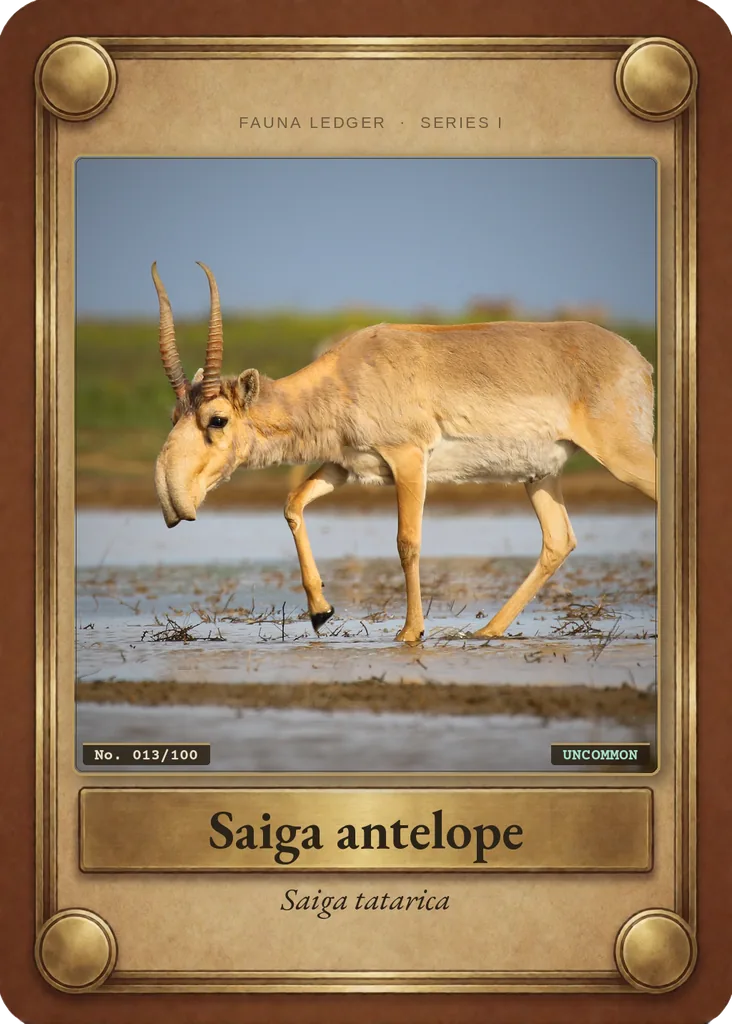
Saiga antelope
Saiga tatarica
Uncommon NT · Near Threatened
Field notes
- Classification
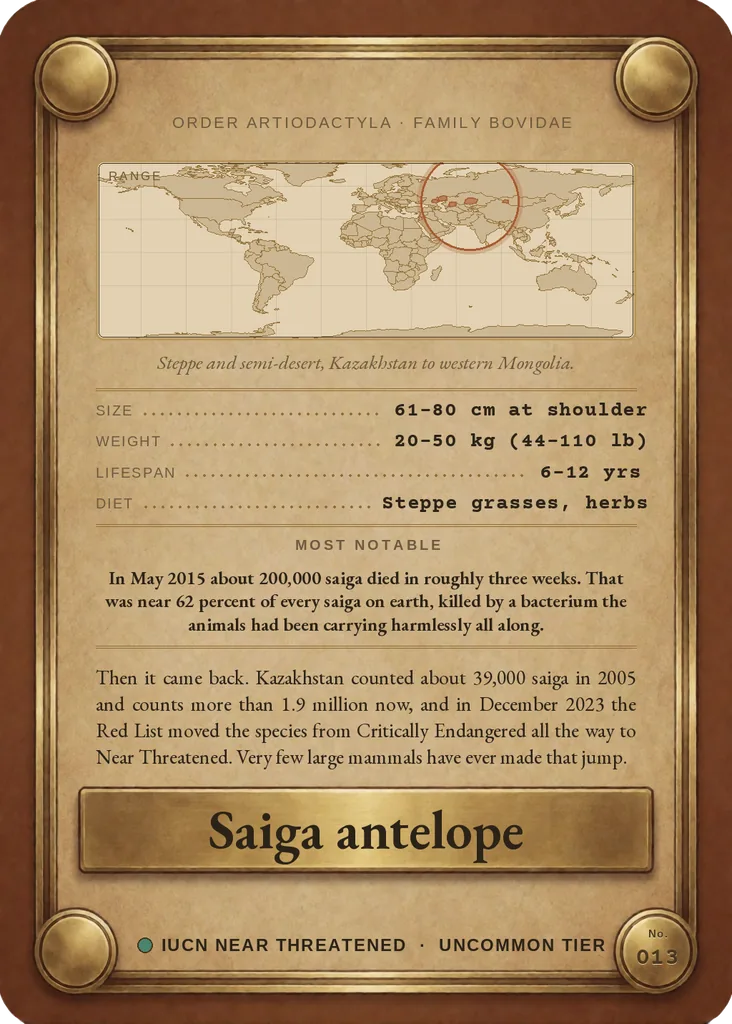
- Order Artiodactyla · Family Bovidae
- Range
- Steppe and semi-desert, Kazakhstan to Mongolia
- Size
- 61–80 cm at shoulder
- Weight
- 20–50 kg (44–110 lb)
- Lifespan
- 6–12 yrs
- Diet
- Steppe grasses, herbs
Most Notable
In May 2015 about 200,000 saiga died in roughly three weeks. That was near 62 percent of every saiga on earth, killed by a bacterium the animals had been carrying harmlessly all along.
Then it came back. Kazakhstan counted about 39,000 saiga in 2005 and counts more than 1.9 million now, and in December 2023 the Red List moved the species from Critically Endangered all the way to Near Threatened. Very few large mammals have ever made that jump.
The nose is the reason it looks like nothing else. Each nostril opens downward into a greatly enlarged chamber lined with mucous glands, an arrangement read as filtering summer dust out of the air and warming winter air before it reaches the lungs.
The 2015 die-off was caused by Pasteurella multocida, which lives harmlessly in healthy saiga. Humidity and temperature in the ten days before calving appear to have been what turned a passenger into a killer. The case fatality rate was effectively total.
It is an Ice Age leftover. Saiga ranged from Britain to Alaska alongside mammoths and woolly rhinos, and the steppe strip it holds now is what is left of that.
Near Threatened is not safe. The category was chosen precisely because the species could fall back quickly: poaching for horn, disease, and disturbance across the calving grounds are all still live.
Range: Steppe and semi-desert, Kazakhstan to western Mongolia.